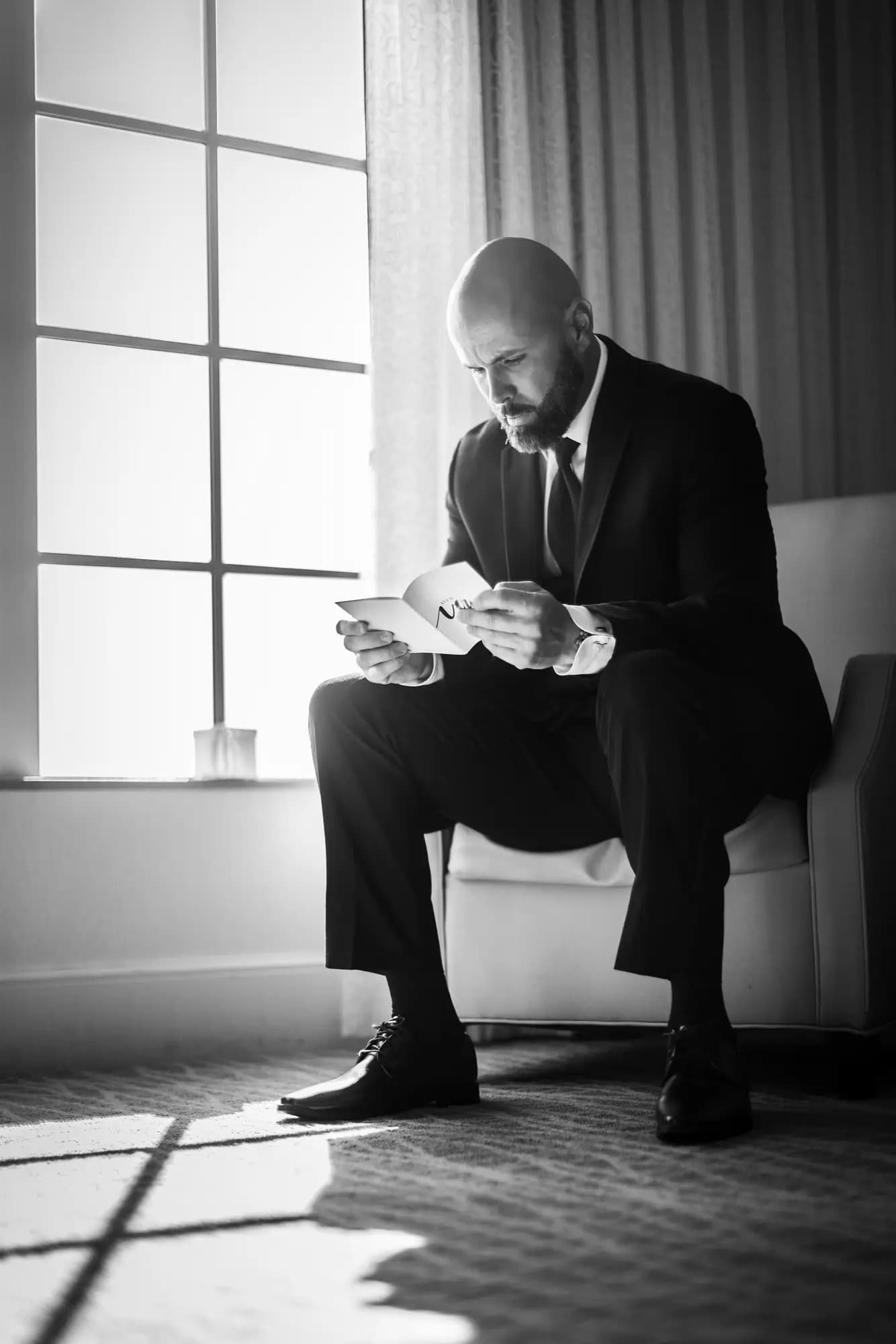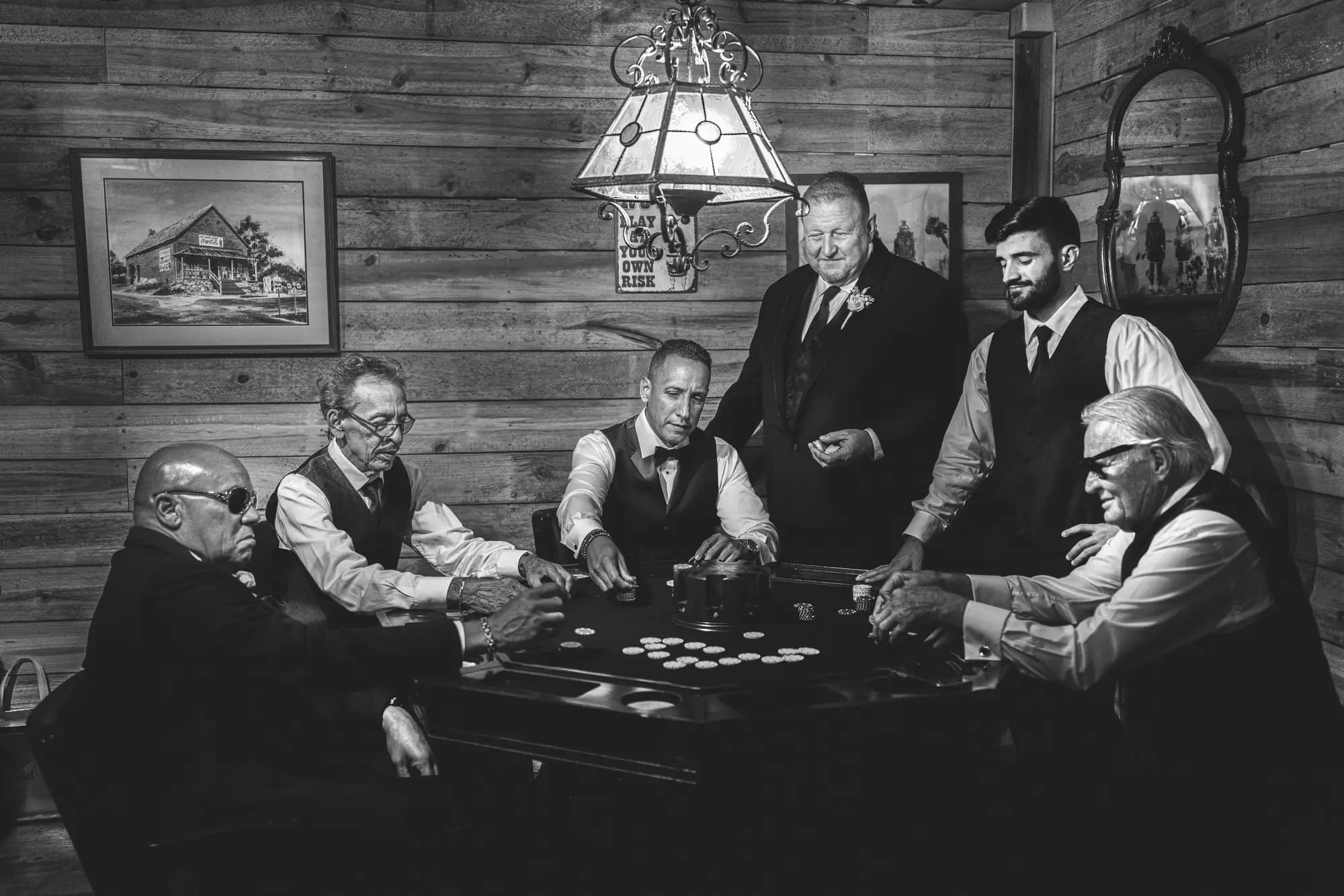
There's a photograph I keep coming back to from a wedding we shot at a waterfront estate in Fort Lauderdale. The bride is standing just inside a doorway, light cutting across her face from a window to her left, her mother behind her adjusting the back of her veil. Neither of them is looking at the camera. In color, it's a beautiful image. In black and white, it becomes something else entirely — something quieter, more interior, almost like a memory rather than a document. That's the thing about monochrome. It doesn't just remove color. It removes distraction, and what's left is pure feeling.
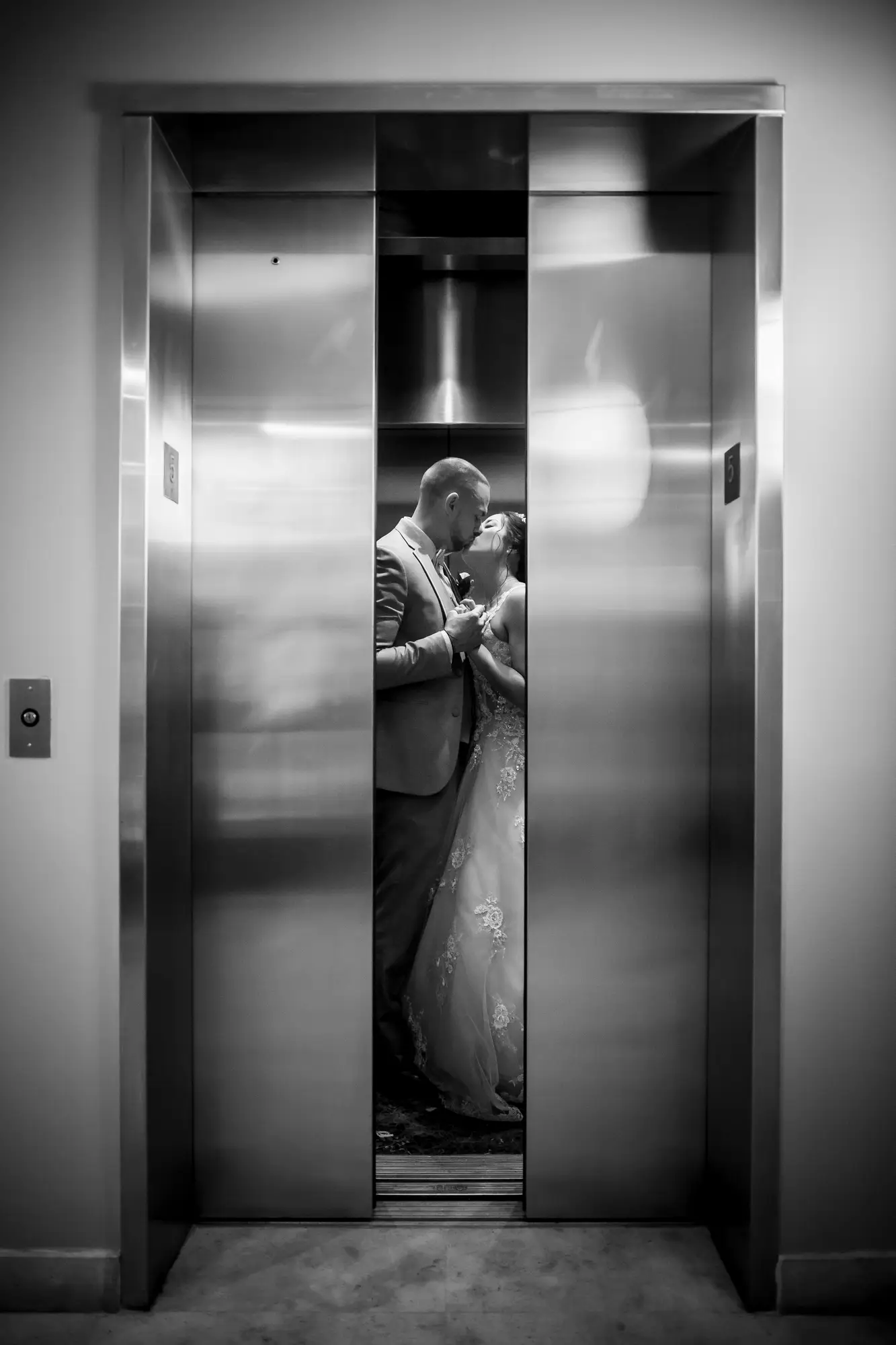
I grew up surrounded by black and white negatives. Tens of thousands of them. Strip film hanging to dry, contact sheets spread across light tables, the particular silver-grey tonality of a well-exposed frame held up to the window. Long before I ever picked up a digital camera, I understood light the way film photographers understood it — not as color temperature, but as contrast, shadow, texture, and the relationship between what's revealed and what's allowed to disappear into darkness. That education never left me, and it shapes every wedding I photograph to this day. When I'm moving through a ceremony or a reception, part of my eye is always reading the scene in monochrome — looking for the images that are fundamentally about light and geometry and human expression rather than the warmth of a sunset or the particular blue of an ocean view.
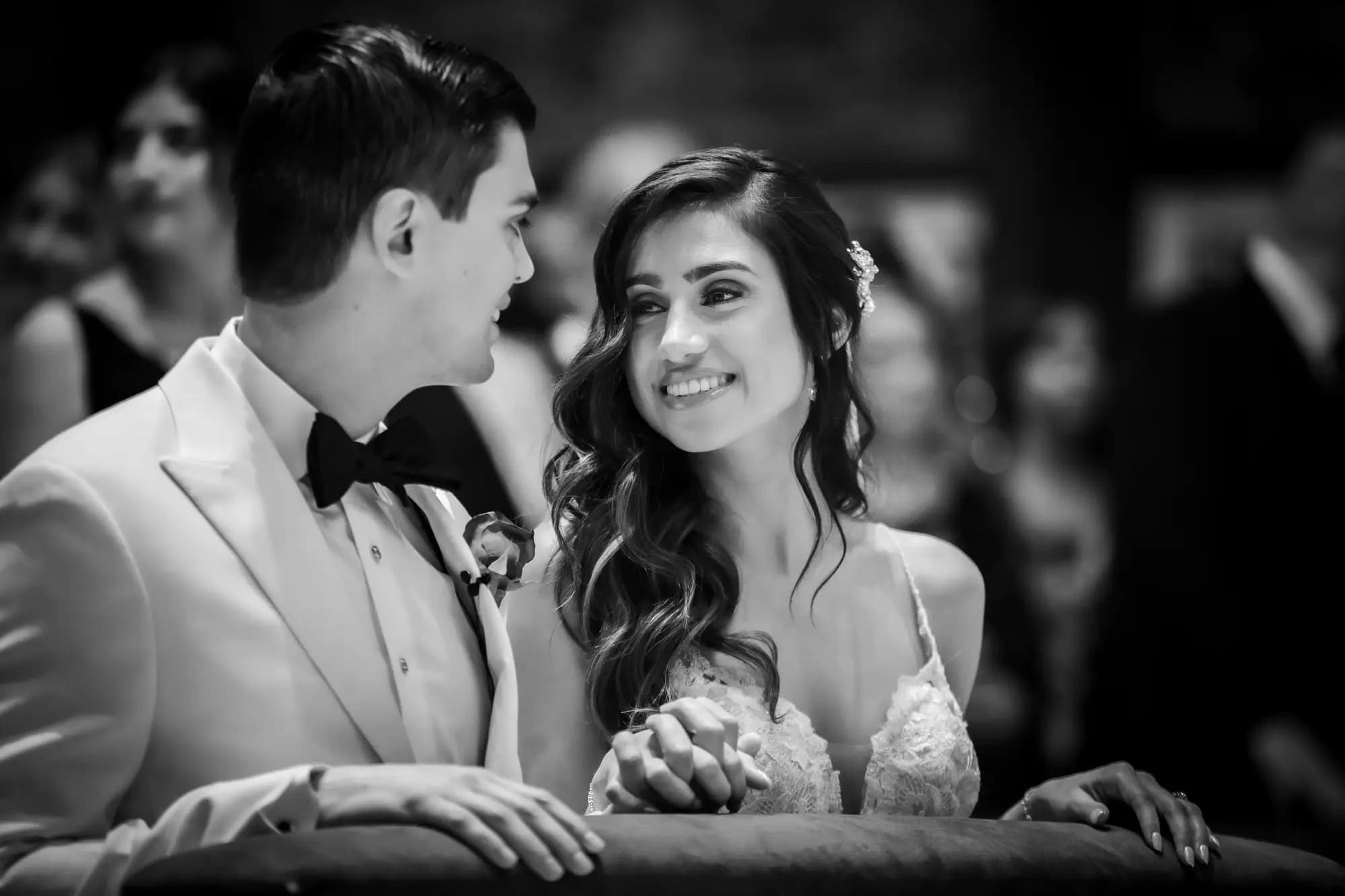
What makes black and white so well-suited to weddings specifically is that a wedding is one of the most emotionally saturated days in a person's life, and emotion reads more nakedly without color. Color carries mood, but it also carries information — the red of a bridesmaid dress, the gold of table linens, the teal of a bridesmaid's shoes. All of that information competes with the face. In monochrome, the hierarchy flattens and the eye goes directly to expression, to body language, to the geometry of two people standing close to each other in a room full of everyone they love. The groom's hands trembling slightly during vows. The way a bride laughs with her whole body during the reception. A grandmother watching from the back row with thirty years of her own marriage behind her eyes. These images don't need color. They need shadow and light, and they need someone behind the lens who knows the difference.
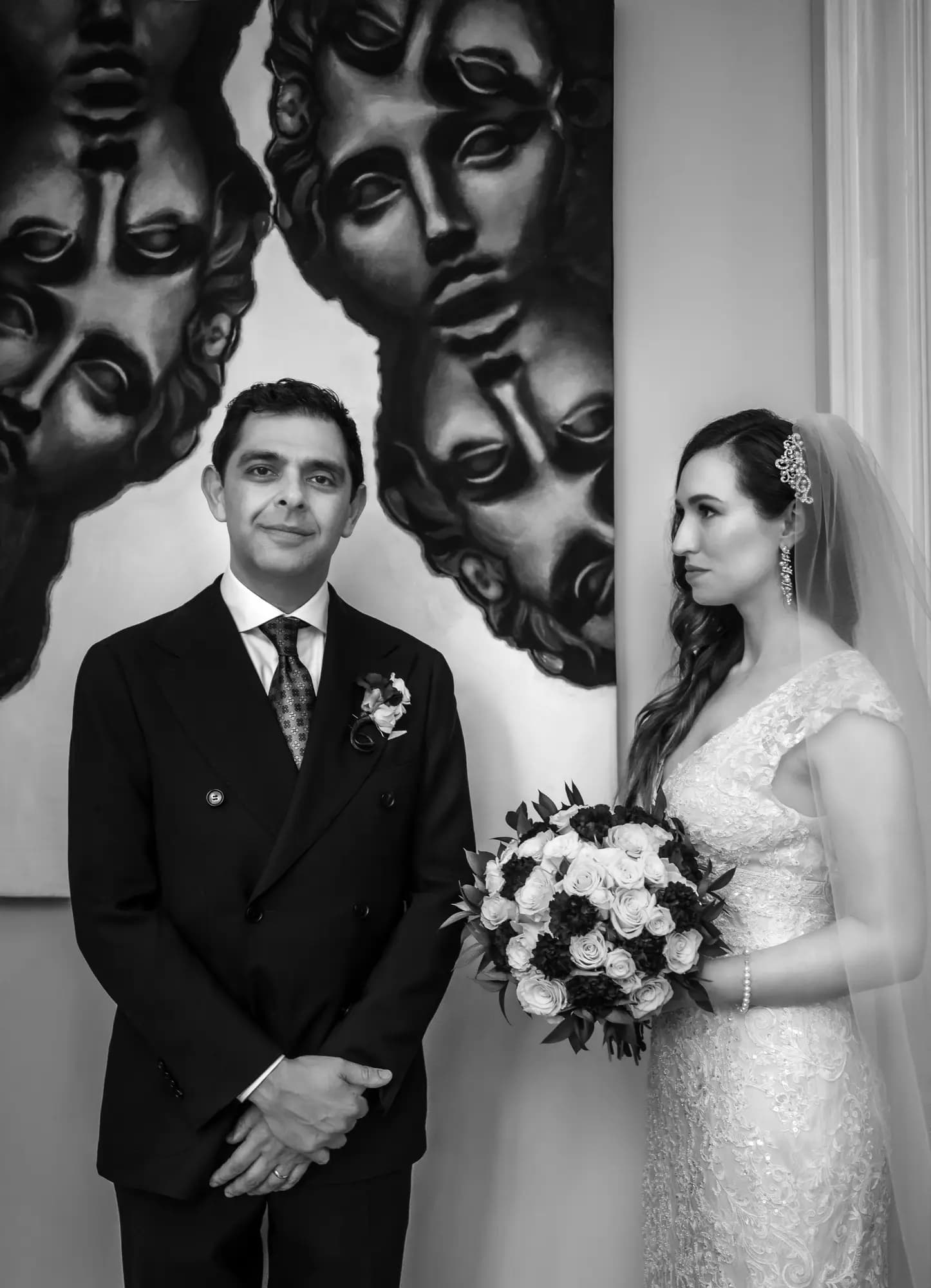
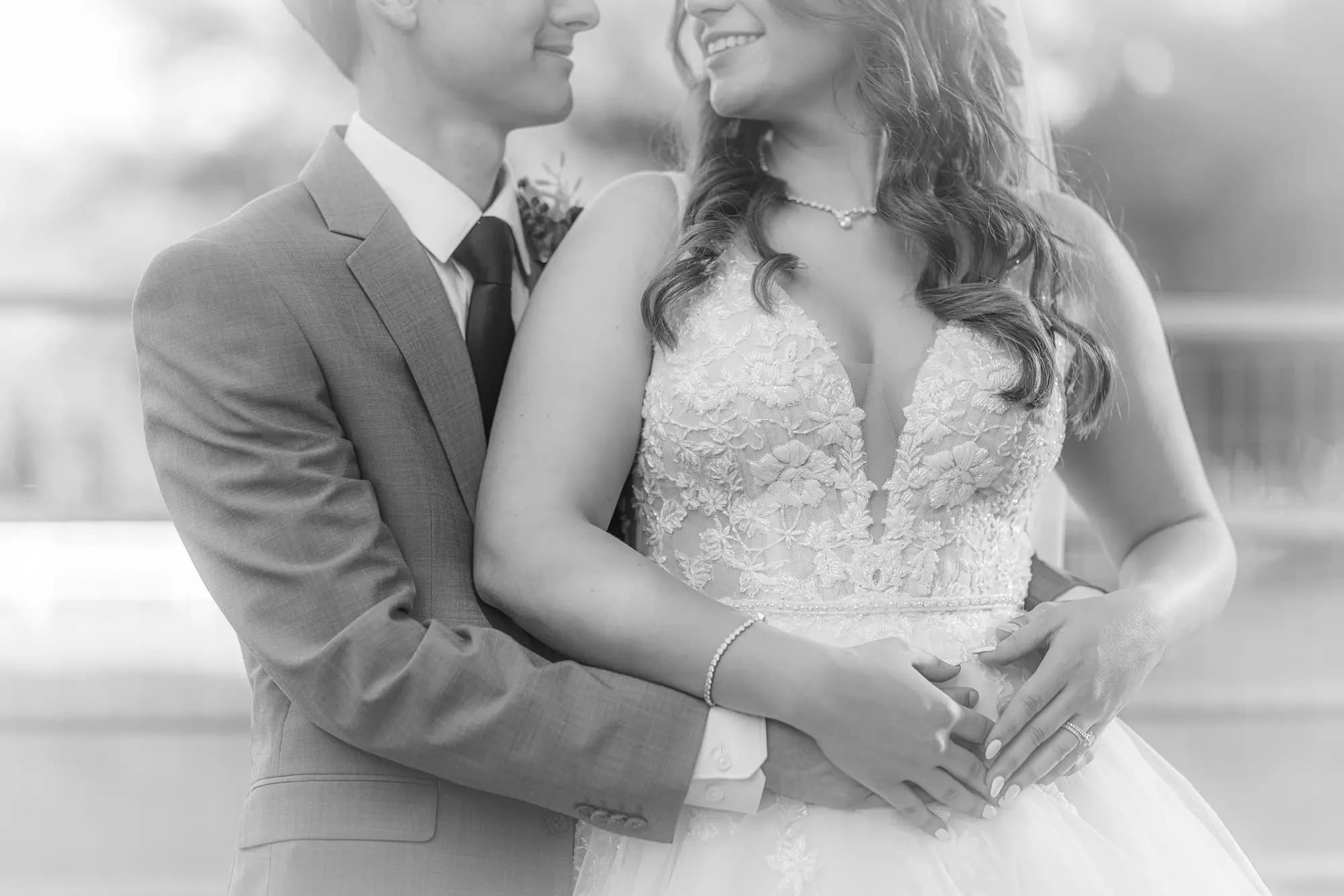
The practical question couples often ask is whether to request a full black and white gallery or let the photographer make selective decisions about which images work in monochrome. My honest answer is that the best approach is collaborative. Some moments are cinematic in black and white but would lose something essential — like the particular orange of a sunset ceremony sky, or the elaborate color of a cultural ceremony wardrobe — if converted. Other frames are simply better, and more honest, when the color is stripped away. What I'd encourage any couple to ask when they're meeting with a photographer is not just whether they shoot black and white, but whether they think in black and white from the moment they raise the camera. That distinction is the difference between a color photo that was desaturated in editing and an image that was always, from the first second of exposure, a black and white photograph.